A capacitive surface knows exactly where your fingers are.
But on your fingers all glass feels the same.
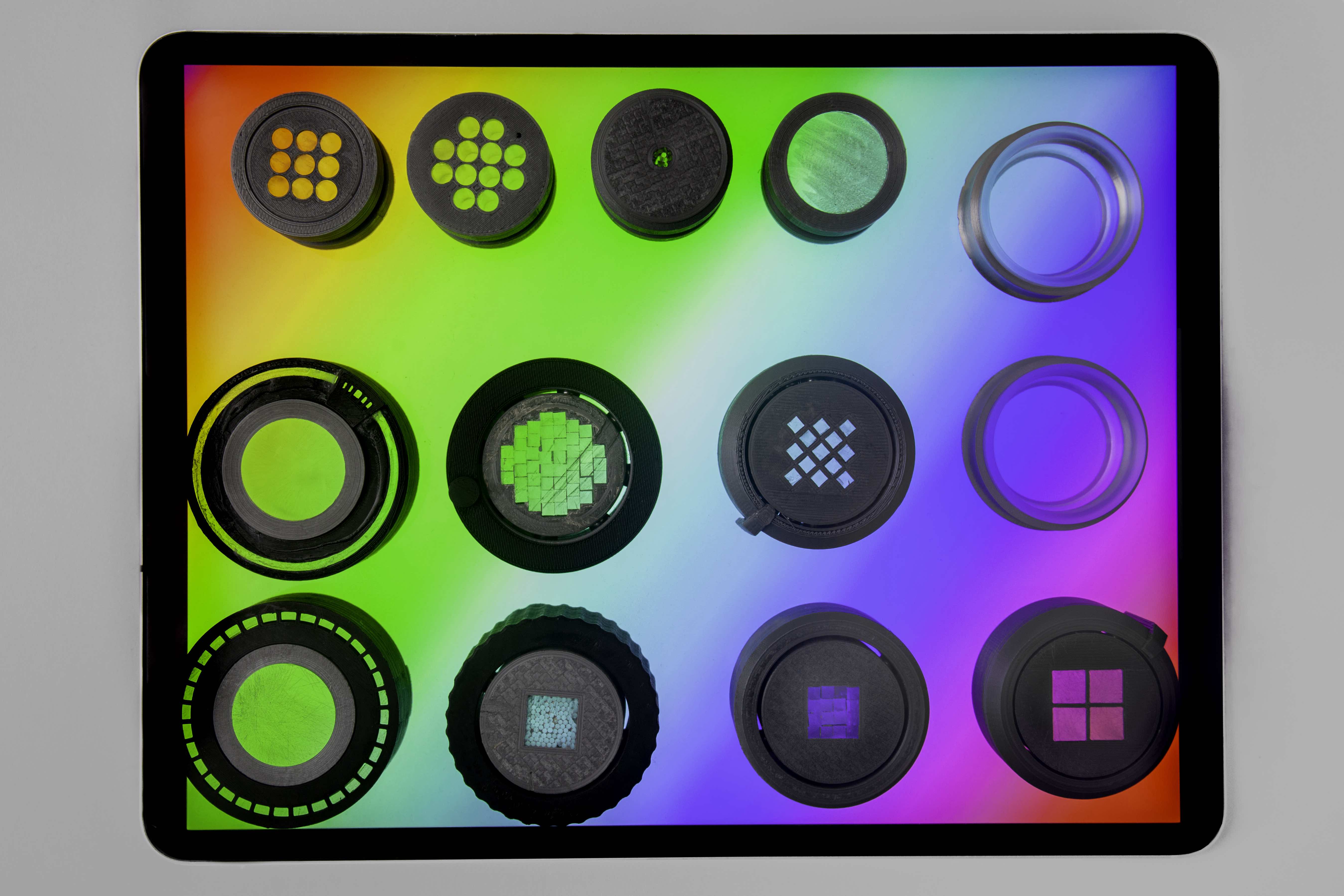
I added a physical dial on a touch display, which the screen could read as rotation.
No electronics in the dial. No battery. Just conductive material, geometry, and a surface that was already listening.
60 seconds.
Eyes-off interaction for BMW.
The point of a physical dial is that you don't look at it.
You reach, you turn, you feel the click. Your eyes stay on the road.
Flat glass doesn't do this. It needs visual attention because there is nothing to find with your fingers. A dial gives the hand an anker.
Prototypes printed in conductive and non-conductive filaments and light-guiding acrylic — testing whether a capacitive screen could reliably read rotation from a passive object. Some didn't work. Most almost worked, which was worse.
Then the real work began: not whether it could work, but how it should feel.
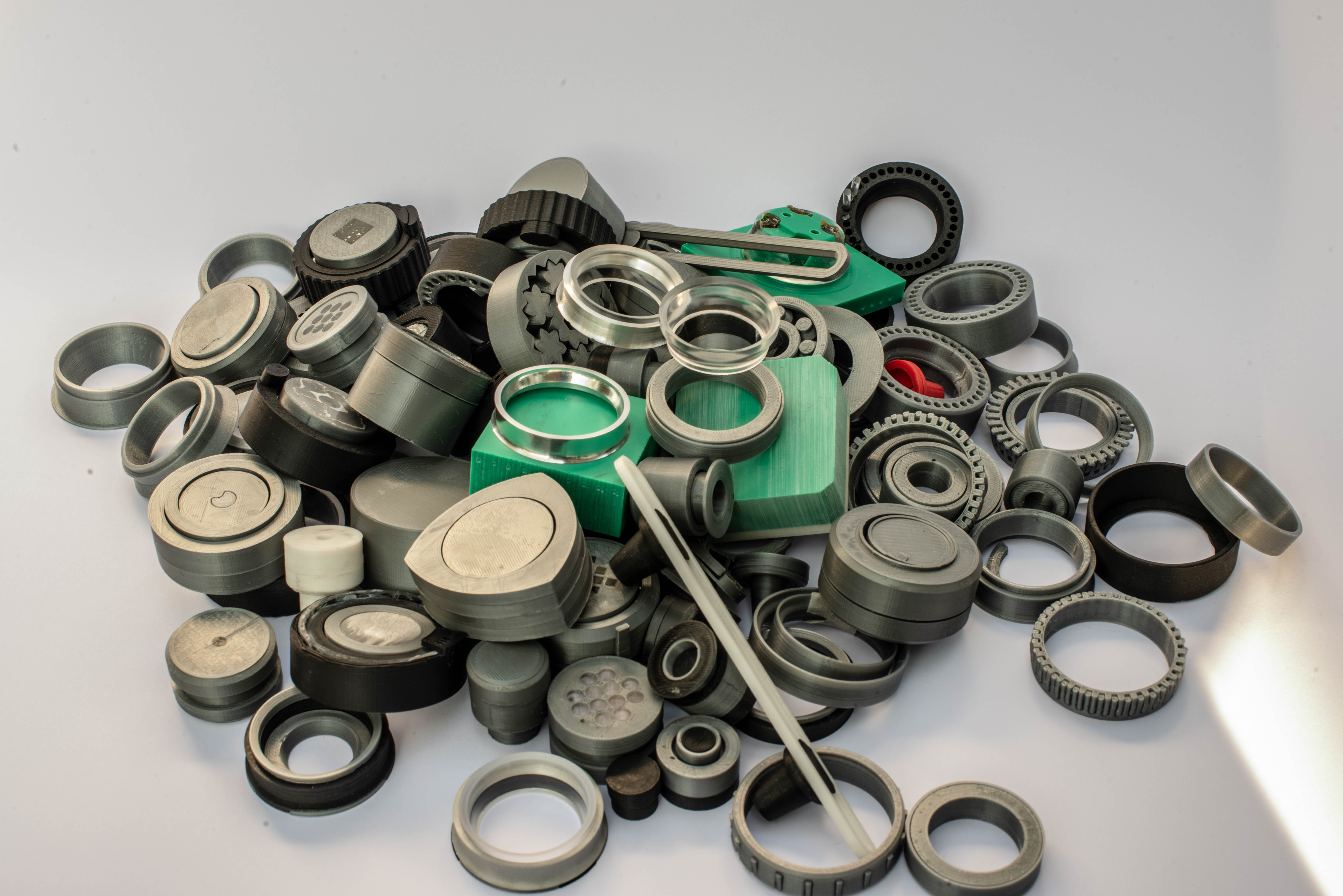
Over 300 prototypes and materials explorations where created to make sure the shape felt just right in the hand.
All click-feel is software, not mechanics — a solenoid and a Raspberry Pi make detents tuneable by context. A volume knob and a fan dial don't want to feel the same, so it seemed only polite to make sure they wouldn't.
The final prototype sat inside a cockpit buck for semi-autonomous scenarios and was presented to BMW Group Design leadership, including Adrian van Hooydonk.
My thesis was accepted.